christopher niquet en
The editor of Study has long observed the publishing and fashion scene. First a stylist, then an author and finally an editor, he took the time to conceive his own magazine as something that takes the opposite approach to most fashion publications. In its 11th issue, he offers a sharp look at the mechanisms of the luxury industry and its recent evolution.
AC You collaborated with many magazines as a stylist, notably Self Service, before publishing Study. Is launching your own magazine something you always had in mind?
CN I think that from the moment I started as an intern, I was already thinking about doing a magazine. My first foray was at Self Service, while I was still at university, before the internet. Then, with the huge range of magazines on offer and understanding a little about their economics, the idea of adding a new proposition seemed a little complicated. I feel that today, most of these magazines are launched as a kind of showcase for the work that the founders can offer on the side, whether they are stylists, creative directors or photographers. Their purpose is not always very clear, and that’s what put me off when I was thinking about starting a magazine of my own. Was it to satisfy an ego, or was there really a purpose and a concept behind it?
AC So you think that most independent magazines don’t have a strong editorial concept and are just a showcase for creativity?
CN I’m absolutely certain of it. I felt that way as a reader, but also when I worked as a freelance stylist or writer. I don’t feel that the main focus or destination is the reader, and I think that’s a shame.
AC Stylists have become the central players in the production of commercial art images, often coming up with the idea for the shoot. Yet, with a few exceptions, it’s a profession that remains in the shadows…
CN Perhaps 10 years ago, the profession was more in the spotlight. The designer used to chose their models and worked with someone in-house. Then people came in to help with casting and directed the fitting room, and finally the stylists arrived, and their power meant that designers could get the right models or not. It was around the time that Street Style blogs emerged, and all the stylists were like representatives of different fashion trends. I feel like the generation that came to prominence in the early to mid-2000s is now around 60 years old, so some have moved on to other things, styling, unless you’re into ultimate classicism like Joe McKenna or Camilla Nickerson, is about feeling your era and trends; and the reality is that, after a certain age, you no longer feel things in the same way. […]
Now I think that if the stylists have faded into the background a little, it’s because there are too many photographers, magazines and stylists, and few new ideas –except perhaps Lotta Volkova we don’t really see people from a new generation with an identifiable style. Fifteen years ago, with Katie Grand, Katie England, Camille Bidault-Waddington, all from the independent press, we could spot their style and understand which fashion show they were working on.
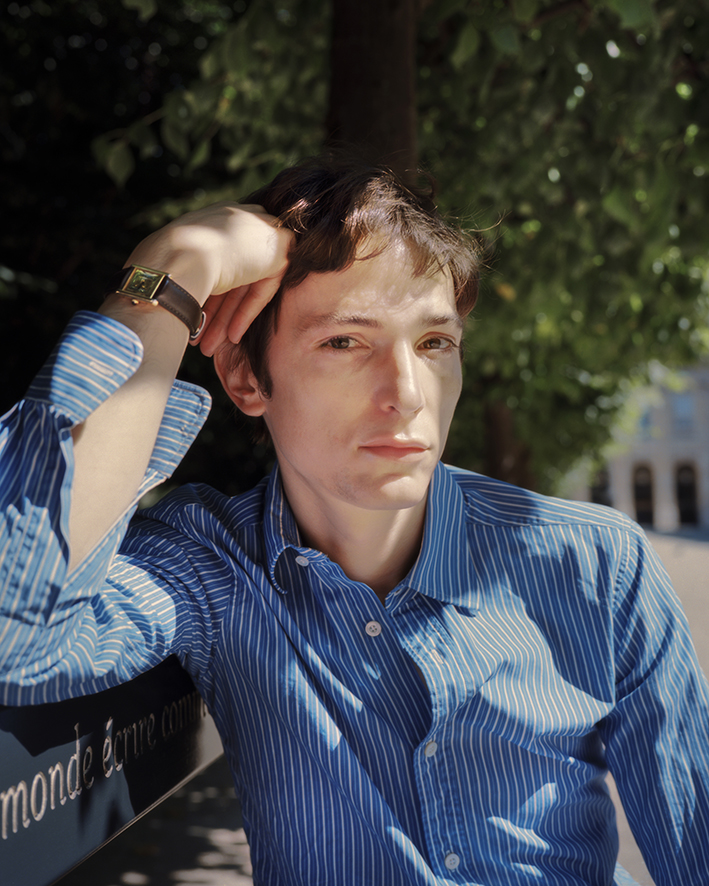
Christopher Niquet ©Achille Laplante Le Brun
AC Is it because designers’ fashion proposals are less interesting, or is it more difficult to give them form, to translate them into fashion shows or fashion series?
CN I think the whole industry has changed. I’m not saying ‘it was better before’, but the big houses are even bigger now. We’ll see this season, with a new generation of designers. Fifteen years ago, the people in place had gone to fashion school and designed outfits from head to toe, and the stylist would come in to tweak the proposal. Now, it’s creative directors who work with teams of very talented designers. I feel like the stylist’s directional work is done by the designer today. Stylists arrive at almost the same time as sales directors, and the battle is lost before it even begins because these companies want to appeal to real customers and imaginary customers all at once, so it’s difficult to create something coherent.
AC You designed Study to look like a folder or file. And the name has an intellectual connotation. Are you trying to counterbalance the apparent superficiality of fashion?
CN Yes and no. Because I don’t think fashion is superficial. The format came from my freelance career in magazines. Each season, I would propose ten topics, and it was usually the most conventional ones that were chosen, not the ones that really interested me. So I had a folder of rejected topics, with ideas to develop. The idea was to get to the heart of how I would like a topic to be covered, not to reproduce the formula of other magazines, but to explore the topic as I would like to discover it if I weren’t the one writing about it. […]
When I decided to launch Study, I already had the first three issues in mind: photos of a friend, the young model Vivienne Rohner, then Adrienne Kennedy, a 95-year-old African-American playwright, and finally street photos in Dakar. The idea of having a magazine enclosed in a sleeve was that readers who liked the format of the first issue would buy the second without opening it, perhaps be surprised, and then buy the third. It was a way of playing on the reader’s curiosity and intelligence, and thinking that obscuring the content was a strength rather than a weakness.
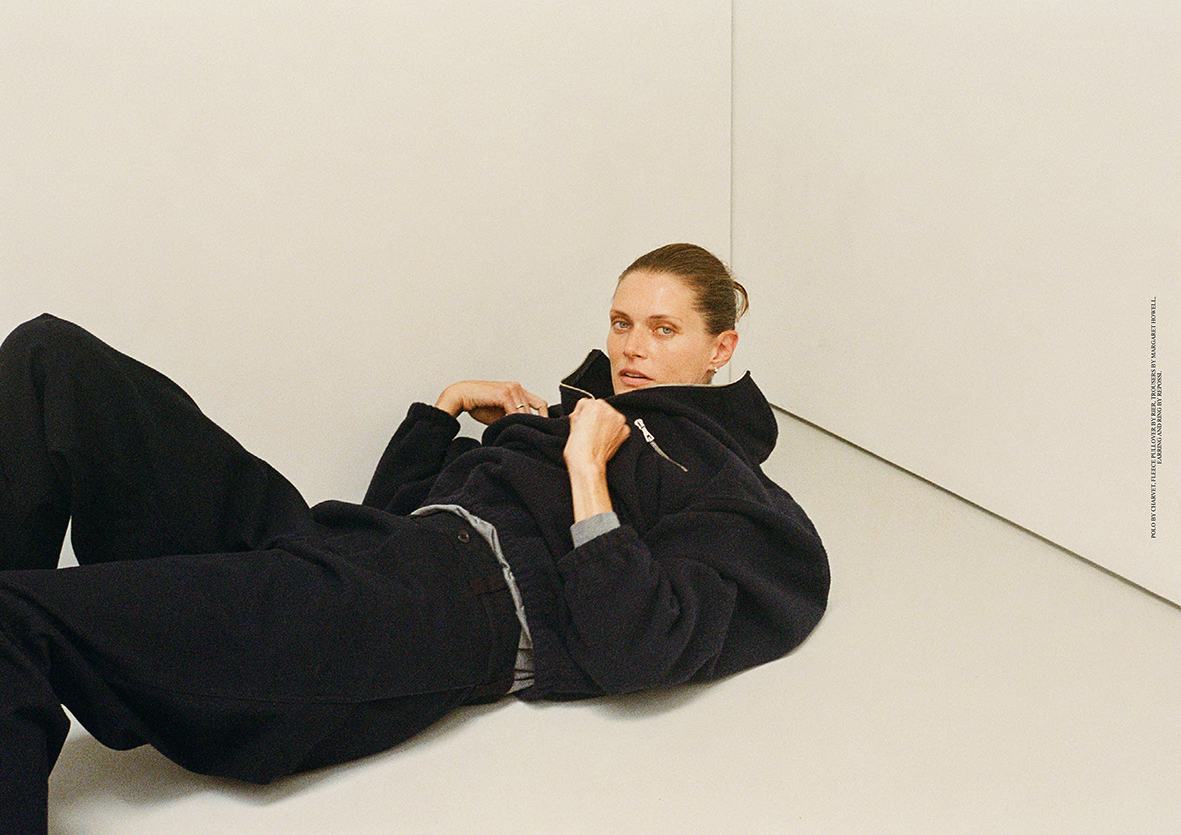
Study Vol.4 ©Marie Deteneuille
AC Your latest issue focuses on beauty, which is quite a mass market topic. Does that still allow you to experiment with images or texts?
CN Beauty is a subject that interests me a lot, and I don’t really understand how it is treated in traditional magazines. Unless it is considered from the point of view of monetising pages… Since our last issue on Shiseido came out, big brands have contacted me to discuss possibilities for interaction, but their format is always the same: work with one of their make-up artists under contract, use their products, which they turn into monetised credit. […]
But we can imagine something much more personal, in this case with Shiseido: the creation of beauty codes. These products are manufactured in factories by the thousands every day, but what is the difference between a €5 tube of lipstick at Monoprix and one that costs €60, €100 or €120 in a luxury boutique? How do brands construct these objects of desire, and why are women and men willing to spend more money if it is associated with one brand or another? […]
For the fashion series, Roe Ethridge photographed a 15-year-old girl at his home. She is not a model, and there was no hairdresser or make-up artist. The designer clothes were often mixed with her own. She is a young girl who has not yet formed an idea of her own beauty, nor what can help her feel prettier… So when it comes to the myths of beauty construction and aesthetic codes, this is how I imagine beauty pages in a magazine, rather than a make-up feature. Because, in the end, they are all done in the same way. The brands are interchangeable, as are the photos and products. Even though I really like some of the images created by Fara Homidi or Lucia Pica, for example. Unfortunately, the way we see beauty is very uniform.
AC Because the economic stakes have become more important?
CN Today, there are so many tools available to help us look like the ideal proposed by these brands, everything passes through this filter and in the end it’s all pretty much the same. There has been a lot of talk about diversity in fashion in recent years, because there was a moment when, suddenly, the press could no longer silence the voices criticising their rather narrow view of what is beautiful and what is not. Except that once fashion gets involved, ‘plus sizes’ are no longer ‘plus sizes’, black people are no longer black… What fashion considers to be diversity is not for someone outside of fashion.
AC You were a stylist, but also one of the few people in the industry who wrote. What do you think writing brings to fashion?
CN What has always frustrated me a little about writing in fashion magazines is that it’s often people who know nothing about fashion who write about it, while people who instinctively know about it don’t know how to talk about it. When talking to creatives who are very knowledgeable about fashion, generous with their words and willing to explain where their influences come from, I get the impression that they are much more articulated than those who make a living from writing. […]
For a very long time, writing about fashion was done by people who reviewed fashion shows, who had enormous influence and made and broke careers. Among them, there were always the more intellectual reviewers (like Cathy Horyn or Vanessa Friedman), but when you talk to them about what’s going on in fashion in general, their references are much more basic than those of the designers, stylists or photographers I’ve met. Except that they don’t express themselves with words and are made to look a bit like idiots. I realised this when I was working as a stylist for a fashion house in Italy, doing consulting and styling for the fashion show, and Carine Roitfeld was doing the campaigns. At the time, she was at Vogue Paris, so it was a bit hidden. Two days before the fashion show, she would visit the designer, look at what was on the racks, and suddenly the clothes were like a language, everything was very intelligent, like a person who knows how to write very well and who knows how to move words around and bring out something really clear with them; it was the same with clothes. What I was doing was good, but nothing more than that, whereas she really elevated the collection. […]
With the magazine, the idea is not to be descriptive. I always start from the principle that my reader is intelligent, even if I don’t really know who they are. There’s no need to explain things more than necessary. The text should feed the visuals but not explain them, as far as possible.
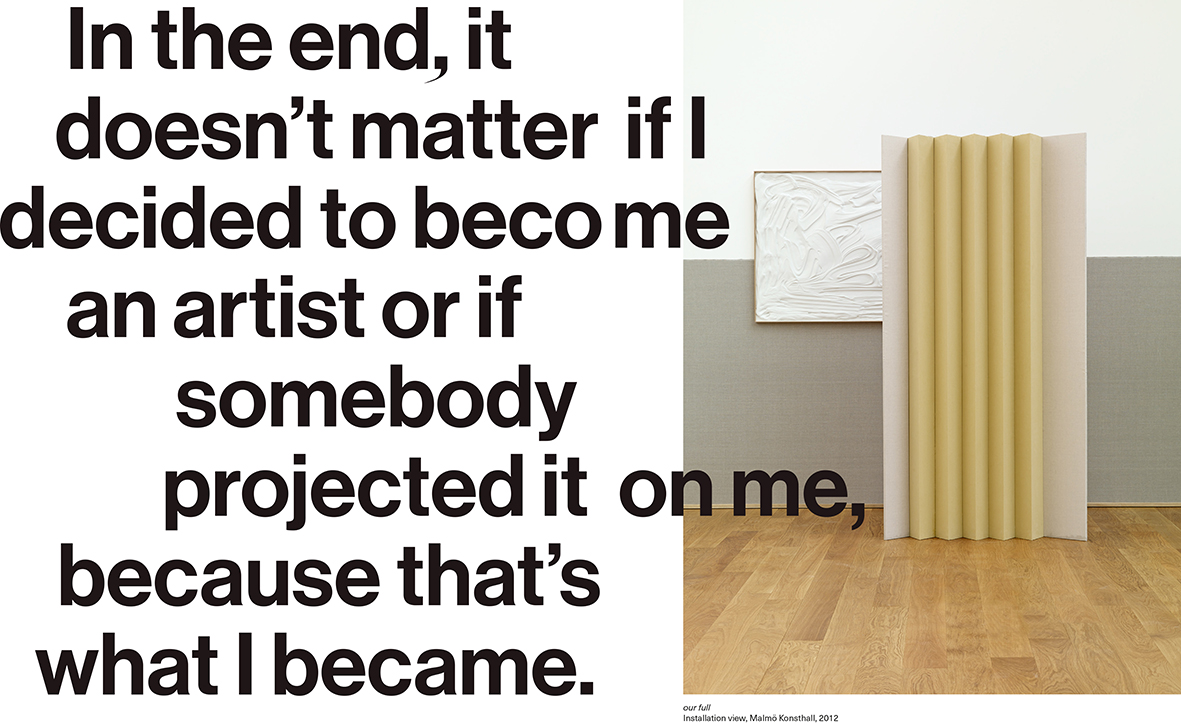
Study Vol.6 Thea Djordjadze
AC Fashion series are mostly fictional or staged, while texts on fashion, if not hagiographic, take the form of chronicles at best. Where is the best place to publish writings on fashion? Books, magazines, newspapers, Instagram?
CN I have read a lot about fashion, but mostly older texts. Why are there no good fashion articles in magazines? Firstly, editors don’t read the articles and don’t care about them. And in independent magazines even more so, the texts are often filler to punctuate the photos and for graphic fun. So the person who commissions the articles for magazines racks their brains at first, then realises it’s not worth it. In mainstream fashion magazines, the reality is that articles are always a way of returning favours to brands and are written to talk about a product. Why use a journalist’s byline when the only things that matter are the publication date, the name of the ambassador and the location of the shoot? I work with Franck Durand at Holiday, and he insists on always having a long literary piece commissioned from a chosen writer, but he’s probably one of the only ones who does that.
AC You’ve been observing the fashion magazine publishing landscape for about fifteen years. How would you say it has evolved?
CN I think the difference is that we discover all these titles first in digital form; my first experience of certain titles, and sometimes my only experience, is a photo that appears on Instagram. This is great because it means you don’t have to rush to the newsstand and feel like you’re missing out on something, but it’s also reductive. In the case of a small magazine, it’s the editor-in-chief’s choice to promote certain content, but in the case of more established magazines, it’s the visuals that will attract readers or best represent the magazine’s identity to advertisers. […]
One of Study’s specificity is that we print few copies. The print run increases with each issue, but only slightly, because I want it to sell out quickly and thus create a kind of demand. Because printing magazines that aren’t going to sell just so they can be displayed in a bookshop, because it’s next to the office of a communications agency, is a bit misleading.

Study Vol.10, Valérie Herklotz
AC Has the fact that magazines now have digital extensions transformed them from within? In other words, are magazines made differently now that digital exists?
CN Yes, definitely. For some titles, digital is a real extension of print, but it takes time and resources. Holiday, the only magazine I work for besides Study, is starting to think about how to expand or offer things alongside print. But that means almost a second team and requires a completely different way of thinking. I’m surprised that there isn’t a greater desire to do things better within established magazines such as Vogue, for example. There is so much more that can be done with your own content than a ‘behind the scenes’ video or a questionnaire with the model at the end of the shoot.
AC The intrinsic pace of digital also encourages more frequent posting, which leaves less time for creativity…
CN The fact that it is monetised also changes the game. Brands are only just starting to approach us to produce special features –which are actually advertorials that no one wants to call advertorials, for which the magazine takes a large fee and continues not to pay its contributors. Or online brand content, which adds nothing, because it’s a diluted version of the brand’s identity and the magazine’s identity. […]
At Study, when we work with advertisers, I am very clear from the outset: we don’t know what will be in the issue, we don’t know how many pages there will be, if you advertise we will do our best to include you in the fashion section, but otherwise it will be in the next issue and we don’t talk about product launches. We don’t buy likes, we don’t post based on whatever news is happening. We don’t calculate profitability in the same way. I hope we cultivate a certain uniqueness, but it’s true that it goes against the grain of what brands are used to hearing. It establishes a real relationship of trust with them, which I am extremely proud of.
AC When we manage to establish an interesting exchange with brands, it’s because they recognise a certain craftsmanship in the production of a magazine.
CN We can have a relationship with creative people within a company. But the discussions we are having are with completely different people, neither number crunchers nor creatives, but somewhere in between. They deal with the press and marketing; they wear several hats, but they are in between both the CEOs and the art directors, and in order to do their job well, they are forced to remain within the brand’s core offering. […]
I think there is less fluidity within companies today. They have grown a lot over the last 15 years and the responsibility of the people at the top is much greater, with more accountability than we think. Even if they hire very creative people –and expect them to be creative– the reality of the business catches up with them, and if they want to keep their jobs, they are forced to put aside some of their creativity to meet the expectations of the people who employ them.
AC Do you think that digital fashion magazines will become the norm and print will become a mere testimony or archive?
CN When I talk to people younger than me, the way they look at print is no different from the way I looked at it at the same age. But the function is no longer the same. Fashion titles, apart from independent press, still think that their raison d’être is information. However, in my opinion, the ones that are doing best are newspaper supplements, such as M (Le Monde), T (The New York Times) and D (La Repubblica). As their readership is guaranteed (with the purchase of the daily newspaper), they can really push the boundaries editorially. And often they educate readers’ eyes more than some independent magazines. […]
If, with a wave of a magic wand, I had a budget to develop Study’s digital presence, I have lots of ideas and it wouldn’t be a digital transposition of the paper content, but things that can’t exist on paper or that are different but complementary to paper. I hope that print will become a purely creative medium and that revenue will be generated online. At some point, they will realise that printing magazines is very expensive, and as readership declines, we could invest digitally in more interesting ways to make print content more specific.